|

One Page Poetry Circle Archive
Welcome to the One Page Poetry Circle!
Date: October 20, 2026
Theme: Poetry and Repair
Time: 5:30 – 6:30 pm
Place: St. Agnes Branch Library, 444 Amsterdam Ave, 3rd fl. Or by email (see addresses below)
Find a poem! Show up! Or send a poem by email!
We're back for the 19th fall season of the One Page Poetry Circle where people examine the works of established poets. While there is no instructor and this is not a workshop for personal writing, once a month OPPC gives everyone a place to become teachers and learners to explore the form, content, language and meaning of poetry. Since the circle began, participants have selected and discussed 1866 poems and have read countless others in pursuit of poetry that speaks to them.
GOOD NEWS:
The One Page Poetry Circle has returned to the St. Agnes Library. For those who are unable to attend, you will still be able to participate by email.
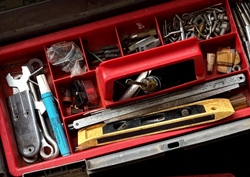
Our topic for October is Poetry and Repair.
Repair can be made to all sorts of things in all sorts of ways. However, repair is at times impossible as in this poem by Mother Goose:
Humpty Dumpty sat on a wall,
Humpty Dumpty had a great fall;
All the king's horses and all the king's men
Couldn't put Humpty together again.
In Robert Vandermolen's poem "An Ether," the reader finds a state of hopeless disrepair:
- Past the fountain out of repair
- And the boarded diner
- A small studio
- You'd never told anyone about
We had an outpouring of poems for September's One Page Poetry Circle: Poetry and Money. Thirteen people attended in person at NYPL's St.Agnes Branch. Five participated through email.
Gail opened the library circle with the romantic poet William Wordsworth's famous "The World Is too Much with Us." The 14 line sonnet in iambic pentameter, the last four lines of which shift in tone to a resolution, opens with familiar lines as relevant today as they were in the poet's time: "The world is too much with us; late and soon,/Getting and spending, we lay waste our powers;—/Little we see in Nature that is ours."
Kai also sent Wordsworth's sonnet with this note, "Written in 1802, Wordworth's sonnet laments that the society of the Industrial Revolution was so caught up in money and materialism that it had lost its connection with the grandeur of nature. Today's society is just as obsessed with 'getting and spending' and just as out of tune and unmoved by the things that truly matter."
Benita gave a wonderful reading of Edwin Arlington Robinson's "Richard Cory" a poetic tale of how money isn't everything:
- And he was rich—yes, richer than a king—
- And admirably schooled in every grace:
- In fine, we thought that he was everything
- To make us wish that we were in his place
Christiana found "Think of Others" by Palestinian Israeli Mahmoud Darwish, translated by Mohammed Shaheen. The poem is shaped as a call and response:
- As you prepare your breakfast, think of others
- (do not forget the pigeon's food).
- As you conduct your wars, think of others
- (do not forget those who seek peace).
Donald read us W. H. Auden's dark poem, "The Capital," published in 1940, which exposes the seduction, glamour, corruption, and exploitation of a modern city. Even the first line begins with money: "Quarter of pleasures where the rich are always waiting,/Waiting expensively for miracles to happen,/O little restaurant where the lovers eat each other,/Café where exiles have established a malicious village."
Cate selected a poem by Erin Belieu, whose work focuses on filtering subject matter through a variety of theoretical constructions. "According to the Study" uses sarcasm with an array of line lengths, breaks, and indentations: "The rich report greater levels of happiness,/& the study goes on to demonstrate/how humans use money to save ourselves,/first from starving, then danger, & finally, from/our neighbors."
Greg chose Allen Ginsberg's "Velocity of Money" from Harper's Magazine, January 1987, with its meaningful capitalizations, spelling, punctuation, and line breaks:
- The velocity's what counts as the National Debt gets higher
- Everybody running after the rising dollar
- Crowds of joggers down broadway past City Hall on the way to the Fed
- Nobody reads Dostoyevsky books so they'll have to give a passing ear
- to my fragmented ravings in between President's speeches
- Nothing's happening but the collapse of the Economy
- so I can go back to sleep till the landlord wins his eviction suit in court.
Daria found "Ready, Set, Go" by Jeanne Hicks on Poetry Soup. The poem resonates with our inflationary times: "It seems that no matter where I go/Prices are changing, and up they go."
Karen entertained us with a reading of "Money" by Dana Gioia, former Poet Laureate of California. The poem is composed of common nicknames and sayings associated with money:
"Chock it up, fork it over,/shell it out. Watch it/burn holes through pockets."
Carol, too, found Gioia's "Money," which pays tribute to Wallace Stevens's statement, "Money is a kind of poetry." Carol notes, "None of the fanciful phrases we commonly use about money actually describe its valuation or economic role—but they certainly convey many of our feelings about the stuff!"
Laura chose William Matthews "Money" with its clever wordplay and use of enjambment: "If you're rich enough you can be haunted/by all the dross you ever wanted./and if you're poor enough you itch/for money all the time and scratch yourself/with anger, or, worse, hope. These thoughts/aren't dark; they're garishly well lit. Let's see."
Annica read us Alice Walker's "The Nature of This Flower Is to Bloom," from a 1973 poetry collection exploring themes of love, resilience, and commitment to beauty amidst struggle: "Rebellious. Living./Against the Elemental Crush./A Song of Color/Blooming/For Deserving Eyes./Blooming Gloriously/For its Self."
AnnaLee completed the in-person circle with Carmen Giménez's "All Money Is a Matter of Belief." The author explores the struggle between leading a poet's life and yearning for material things. The poem is prosaic in nature, using enjambment as it swings from line to line: "Every poet glistens with the dew/of money, but surely only some of them/truly have it. Never enough, wanting to know/what enough felt like, I buy fake versions."
Abigail found "Money," a prose poem by Reginald Gibbons wherein children are taught to save rather than to help others. Although their mother will not help the needy coming to their door, "Their mother opened a savings account for each child and into each put the first five dollars. The children felt proud to see their names in the passbooks, and wanted to know when they could take the money out. But they were told they had to save their money and not spend it."
June sent Susan Firer's "Money Is the Thing With Feathers," as she enjoyed "the cleverness of the concept—and the fun of finding out how many allusions I recognize (most, but not all)." : "Do not go gentle into that good money/The pure products of money go crazy/Money sweeping out from us to disappear/Oh Money! My Money! our fearful trip is done/I myself will die without money/Money, Money, you bastard, I'm through."
Scott chose Kathleen Raine's "Worry About Money" because he likes "the way it contrasts the worldly view of money with the religious view": "Wearing worry about money like a hair shirt/I like down in my bed and wrestle with my angel."
Next theme: Poetry and Repair. Whether a poem concerns repair, needs repair, or has been repaired, bring or send a poem that has meaning to you. If you can't attend in person, email the poem to one of us by October 20th, with a brief comment on why you chose it. Check out Poetry Foundation or poets.org. In the meantime, blog with us at onepagepoetrycircle.wordpress.com.
Fall 2026 Schedule
October 20: Poetry and Repair
November 17: Poetry and the Home
December 15: Poetry and an Ending
Abigail Burnham Bloom, abigailburnhambloom(at)gmail(dot)com
AnnaLee Wilson, annalee(at)kaeserwilson(dot)com
The One Page Poetry Circle is sponsored by the New York Public Library and is open to all.
St. Agnes Branch Library is handicap accessible.
|


